
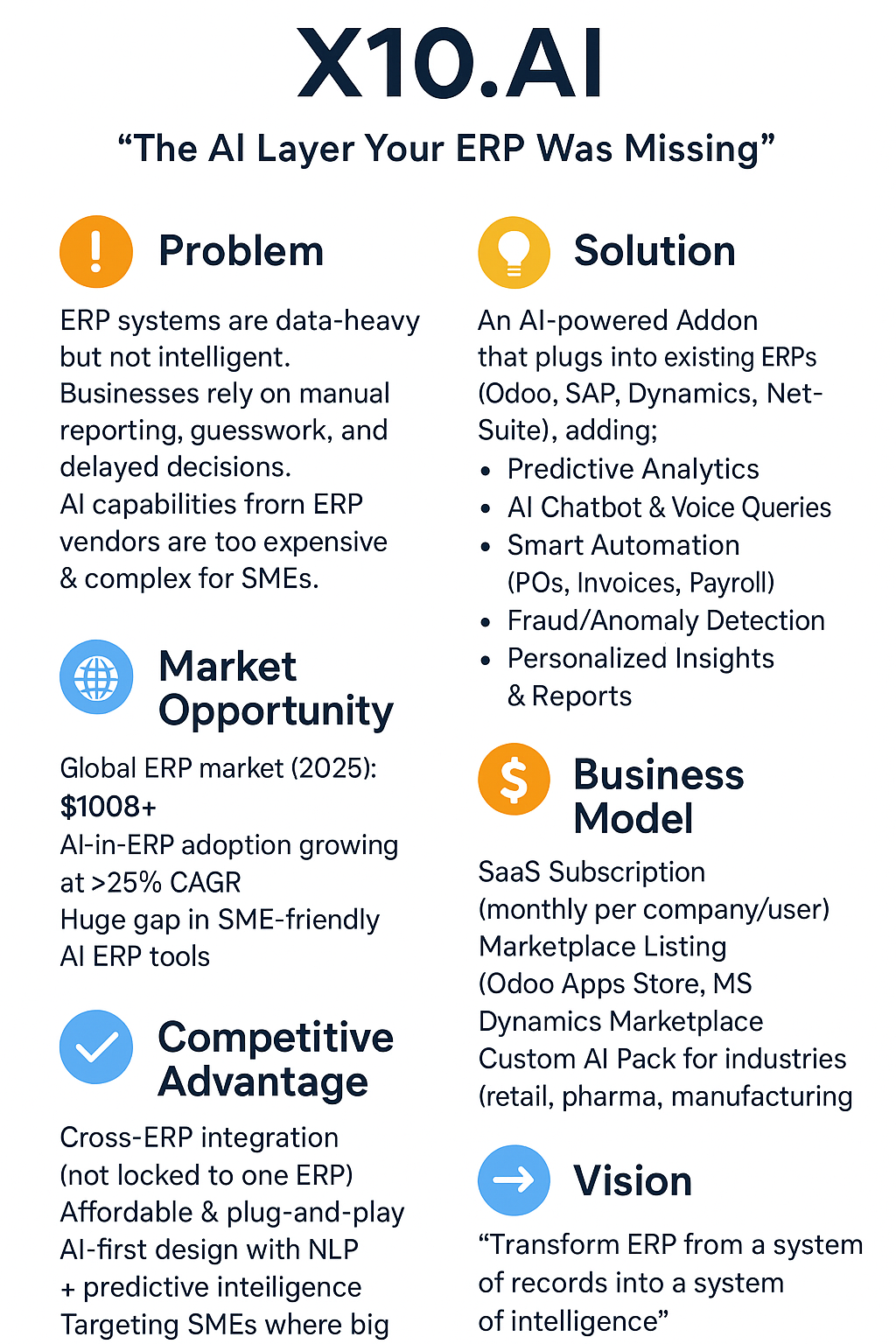
- Intelligent Automation
AI can automate repetitive tasks such as invoice processing, purchase approvals, payroll entries, and inventory updates.
Reduces manual effort and errors.
Example: AI-powered bots in ERP can auto-create purchase orders when stock reaches a threshold.
- Predictive Analytics
ERP with AI can forecast demand, sales trends, and inventory needs using historical and real-time data.
Predicts equipment breakdowns in manufacturing (predictive maintenance).
Improves planning and reduces wastage.
- Personalized Insights & Decision Support
AI analyzes ERP data and gives managers recommendations for pricing, discounts, supplier selection, or cash flow management.
Custom dashboards adapt to user roles and preferences.
- Natural Language Processing (NLP)
Users can interact with ERP using voice commands or chatbots instead of navigating complex menus.
Example: “Show me last quarter’s sales performance in North India” → ERP chatbot responds with visual insights.
- Fraud Detection & Risk Management
AI can detect anomalies in financial transactions, procurement, or HR processes.
Identifies potential fraud or compliance violations early.
- Customer Experience & CRM within ERP
AI helps in customer segmentation, behavior prediction, and personalized marketing within ERP-integrated CRM modules.
Chatbots integrated with ERP respond to customer queries automatically.
- Supply Chain Optimization
Real-time AI models optimize supplier selection, logistics, and inventory allocation.
AI integrates IoT data (from sensors in warehouses, trucks, machines) to ensure smooth supply chain management.
- Human Resource Management
AI in ERP assists in recruitment (resume screening), workforce planning, and employee performance tracking.
Predicts attrition and suggests retention strategies.
- Financial Forecasting
AI improves budgeting, cash flow forecasting, and profitability analysis.
Suggests cost-saving opportunities from ERP financial data.
- Continuous Learning ERP Systems
ERP becomes self-learning: adapting processes based on past decisions and market changes.
Makes ERP more agile and future-ready.